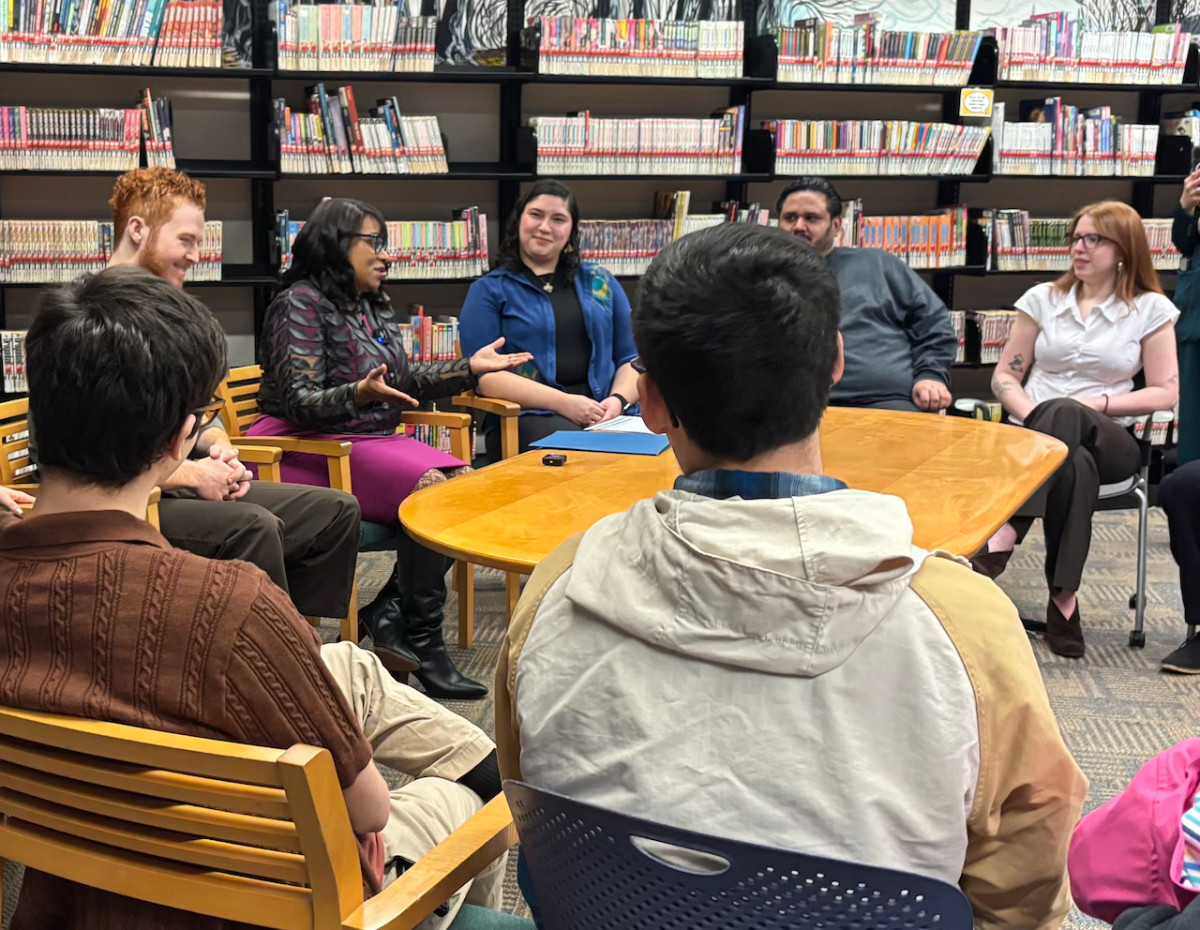
U.S. Rep. Janelle Bynum heard an earful Monday from Oregonians mostly younger than 40 about the financial pressures they face every day: unaffordable child care, sky-high student loans, soaring rents, a tough job market and dim hopes of ever being able to buy a home.
The nearly 20 voters, most of whom live in the 5th Congressional District that Bynum represents and many of whom are raising babies or toddlers, were invited to a West Linn library to tell the first-term Democratic member of Congress what keeps them up at night – and what would help them thrive.
Much of what they called for aligned with a plan Bynum was there to pitch, a package of 16 bills she’s marketing as a “K to 30” agenda. The proposals aim to help young people from elementary school to adulthood by spurring housing creation, expanding mental health care in schools and providing more support to small businesses, among other things.
Nearly half the bills have multiple sponsors who include Republicans, she noted.
Bynum, who served four terms in the Oregon House before winning a tight race for Congress in 2024, said she is repulsed by how bitterly partisan the U.S. House tends to be – but said she’s managed to make significant inroads.
She said she focuses on drafting bills that address topics that broad swaths of people agree are needed, such as drone safety, wildfire response and small business success. And, she said, “I believe in developing relationships,” including with fellow parents in the House with whom she can bond over their shared concern for their children.
Bynum’s own children are 24, 21, 17 and 15. She said the tough circumstances her constituents told her about Monday – child care needs that prevent them from working full time, elder care needs that strain young adult family members, finances that push families into multi-generational living, punishing student loan debt, a tough job market – are “like what I am seeing from my children and their contemporaries."
The inability of the typical young American to buy a home until they reach their late 30s is very real and concerns her, Bynum said. When she was 25, a quarter century ago, buying a house in one’s 20s “was totally doable,” she said. “Now, when I look at my 24-year-old daughter, I don’t see any hope.”
One of the bipartisan bills in her 16-bill package would require the federal government to pay to create preapproved, standardized building plans and designs to speed up permitting and construction of housing with a goal of lowering home prices. The House Financial Services Committee approved it last month, her office said.
Among those Bynum heard from:
>> Gabi Uvale, adviser to the student government at Oregon State University, said she couldn’t afford rents in Corvallis and so found a one-bedroom apartment in Albany instead. She said she has a master’s degree but feels that to be able to afford a house, she would need to get an additional graduate degree.
>> Rowan Bean, student body president at Portland State University, said nearly half of PSU students qualify for federal food aid due to their low incomes. “One of the biggest concerns I hear this year is the uncertainty about getting a job after graduation. … It’s costing so much to go to school right now and all the additional costs that come with just being a person in this country. …A lot of (students) are very worried about having food security and also getting a job after college too.”
>> Jessica Gallegos, a self-employed graphic designer and parent of a 2 ½ year old, said she tried to find full-time work after she was laid off a year ago. But she ended up needing to work for herself due to subsidized child care only being available six hours a day, she said. “How do you find a full-time job when you don’t have child care?” she asked. “My solution was to start my own business.” Meanwhile, Republicans cut federal funding for a nonprofit program that used to provide free mentoring and other support to small businesses like hers, she said.